Why I Choose Cloudflare: Benefits, Features & My Experience

When I first started looking at Cloudflare, I thought of it mainly as a CDN and a tool that could make websites faster. But the more I explored it, the more I realized that Cloudflare offers much more than that.
Today, when I think about website performance, security, DNS, DDoS protection, and modern web infrastructure, Cloudflare is one of the first platforms that comes to my mind.
So, why would I choose Cloudflare?
For me, it comes down to one simple idea: I want my website and applications to be fast, secure, and reliable without making my infrastructure unnecessarily complicated.
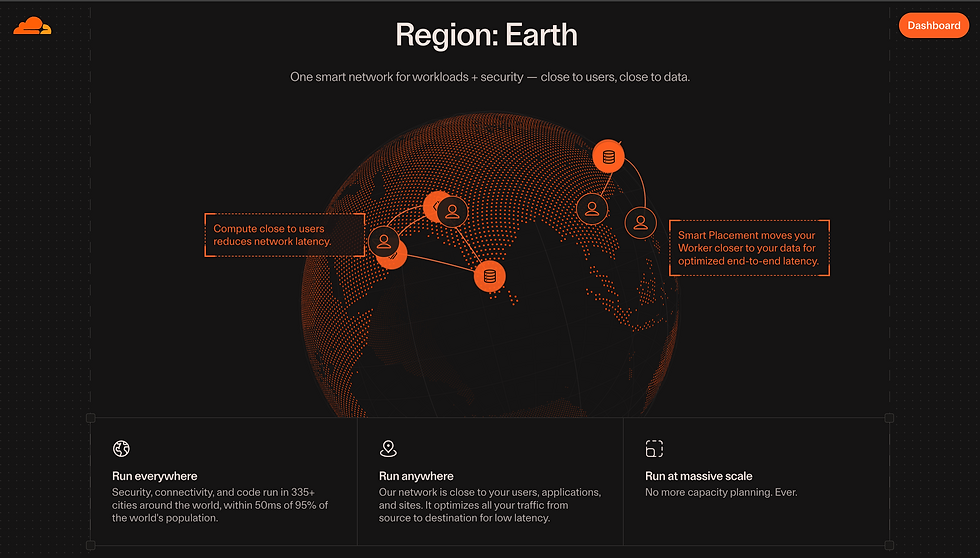
Table of Contents
What Is Cloudflare?
Cloudflare is a global internet infrastructure and cybersecurity platform that provides services such as CDN, DNS, DDoS protection, Web Application Firewall (WAF), Zero Trust, and developer tools.
In simple terms, Cloudflare can sit between my users and my infrastructure and help me manage how traffic reaches my applications.
That makes it useful not only for large companies but also for developers, startups, and small businesses.
Why Do I Choose Cloudflare?
There are several reasons Cloudflare stands out to me.
Security Is a Big Reason
One of the biggest reasons I would choose Cloudflare is security.
Any website connected to the internet can potentially become a target for malicious traffic, bots, DDoS attacks, and other threats. I don't want to wait until something goes wrong before thinking about security.
Cloudflare gives me several layers of protection, including DDoS protection and Web Application Firewall capabilities.
For me, that means I can add an important security layer without having to build everything myself.
I Care About Website Speed
Nobody likes waiting for a website to load.
If I visit a website and it takes several seconds to respond, there is a good chance I will simply leave. The same is true for my visitors.
Cloudflare's CDN can cache and deliver content through its global network, helping content reach users from locations closer to them.
This is particularly useful when a website has visitors from different parts of the world.
Of course, Cloudflare isn't a magic button that automatically makes every website fast. Website code, images, hosting, databases, and overall optimization still matter.
But having a strong delivery layer definitely makes Cloudflare attractive to me.
I Like Having DNS and Other Services in One Place
DNS is something most users never think about, but it is fundamental to how the internet works.
I like the fact that Cloudflare allows me to manage DNS while also providing access to other services such as CDN and security.
Having related infrastructure capabilities available from one platform can make things easier to manage.
Instead of constantly jumping between different services, I can keep a significant part of my internet infrastructure within the same ecosystem.
DDoS Protection Gives Me Peace of Mind
DDoS attacks can make websites and applications unavailable by overwhelming them with traffic.
This is one of those things I would rather prepare for before I actually need the protection.
Cloudflare's DDoS protection is therefore another reason I find the platform appealing.
I don't want to spend my time manually figuring out how to handle every traffic spike or attack. Having infrastructure designed to detect and mitigate malicious traffic gives me another layer of confidence.
Cloudflare Is More Than Just a CDN
This is probably one of the things that surprised me the most.
When many people hear "Cloudflare," they immediately think of CDN and DNS. But the platform has grown into a much broader technology platform.
Some of the Cloudflare services that I find particularly interesting include:
Cloudflare CDN: Helps cache and deliver website content through Cloudflare's global network.
Cloudflare DNS: Provides authoritative DNS services for managing domains and DNS records.
Cloudflare DDoS Protection: Helps protect websites, applications, and networks against distributed denial-of-service attacks.
Cloudflare WAF (Web Application Firewall): Helps protect web applications by filtering potentially malicious HTTP traffic.
Cloudflare Bot Management: Helps organizations identify and manage automated bot traffic.
Cloudflare Zero Trust: Provides tools for securing access to applications, devices, and corporate resources.
Cloudflare Workers: Allows developers to run application code on Cloudflare's global network.
Cloudflare Pages: Provides a platform for deploying websites and web applications.
Cloudflare R2 Storage: Provides object storage designed for storing application data and files.
Cloudflare Workers KV: Provides globally distributed key-value storage for applications.
Cloudflare Load Balancing: Helps distribute traffic across multiple servers or infrastructure endpoints.
Cloudflare Tunnel: Allows organizations to connect applications and private services to Cloudflare without exposing their origin infrastructure directly to the public internet.
For me, this is where Cloudflare becomes much more interesting.
It isn't simply a service that I put in front of my website to make it faster. I can potentially use different parts of the Cloudflare platform across the entire application stack from DNS and security to application development, storage, networking, and access control.
I also don't need to use everything at once. I can start with something simple like DNS or CDN and explore services such as Workers, WAF, Zero Trust, or R2 as my requirements grow.
That's one of the things I like about Cloudflare: I can use it as much or as little as my project actually needs.
I Like the Developer Side of Cloudflare
Another reason I would choose Cloudflare is its developer platform.
Cloudflare Workers, for example, allows developers to run code on Cloudflare's network without following the traditional model of managing a server for every application workload.
This opens up interesting possibilities for building applications that can run closer to users.
For developers, I think this is where Cloudflare becomes particularly interesting.
It isn't just about putting a website behind a CDN anymore. It can become part of the application architecture itself.
Zero Trust Is Another Big Advantage
The way organizations work has changed.
Employees work remotely, applications are hosted in the cloud, and company resources are no longer necessarily sitting inside one physical office.
Cloudflare's Zero Trust platform is designed around this modern environment.
Instead of assuming that someone is trustworthy simply because they are connected to a particular network, Zero Trust allows organizations to apply access policies based on factors such as identity and device.
For organizations trying to modernize their security approach, this is another reason to consider Cloudflare.
I Like the Global Infrastructure
If I build something that is used by people in different countries, I don't want to think only about users who are geographically close to my server.
Cloudflare's global network is one of its biggest strengths.
Having infrastructure distributed across different locations can help improve the experience for users accessing applications from different parts of the world.
This becomes increasingly important as a website or application grows internationally.
It Can Grow With My Project
One thing I appreciate about technology platforms is flexibility.
My requirements today might be very different from what I need a year from now.
I might start with DNS and CDN capabilities. Later, I might need stronger application security. Eventually, I might explore Workers, Zero Trust, or other Cloudflare services.
The fact that Cloudflare has such a broad ecosystem means I don't necessarily have to completely change platforms every time my requirements evolve.
Is Cloudflare Perfect?
No technology platform is perfect, and I don't think Cloudflare should be treated as a solution to every problem.
There can be a learning curve, particularly when moving beyond basic DNS and CDN functionality. Some advanced features may also require paid plans or additional configuration.
And Cloudflare doesn't replace good development practices.
A poorly optimized website won't suddenly become perfect just because it is behind Cloudflare.
I still need good code, optimized images, secure applications, reliable hosting, proper monitoring, and sensible security practices.
Cloudflare is a layer that can complement those things.
Is Cloudflare Worth It for Me?
For me, the answer depends on what I am building.
If I only have a very simple website with minimal traffic and requirements, I may not need every feature Cloudflare offers.
But if I'm building a website, SaaS application, API, or online business where performance, security, reliability, and scalability matter, Cloudflare becomes much more attractive.
That's ultimately why I would choose it.
What Are the Main Benefits of Cloudflare?
The key benefits of Cloudflare are:
Benefit | How Cloudflare Helps |
Security | Helps protect websites and applications from various cyber threats |
Performance | CDN and network services can improve content delivery |
Reliability | Global infrastructure can improve application availability |
DNS | Provides managed DNS services |
DDoS protection | Helps mitigate distributed denial-of-service attacks |
WAF | Adds a security layer for web applications |
Zero Trust | Helps secure access to applications and resources |
Scalability | Supports applications as traffic and requirements grow |
Developer tools | Provides platforms for building and deploying applications |
Centralization | Combines multiple internet services into one ecosystem |
The biggest reason I choose Cloudflare isn't because it has the longest list of features. It's because many of those features solve problems that I actually care about.
I want my applications to be secure.
I want websites to load quickly.
I want my infrastructure to be reliable.
I want protection against malicious traffic.
And as a developer, I like having the option to use modern tools for building applications.
Cloudflare brings many of these capabilities together.
So, if someone asks me "Why choose Cloudflare?", my answer would be simple:
Because it gives me a practical way to make my web infrastructure faster, more secure, and more reliable while giving me room to build and scale as my needs grow.
And that's what makes Cloudflare worth considering.
Frequently Asked Questions (FAQs)
What is Cloudflare used for?
Cloudflare is used for services including website security, CDN, DNS, DDoS protection, WAF, Zero Trust, application delivery, and developer infrastructure.
Why should I use Cloudflare?
You might choose Cloudflare to improve website security and performance while gaining access to services such as CDN, DNS, DDoS protection, WAF, Zero Trust, and developer tools through one platform.
Does Cloudflare make websites faster?
Cloudflare can improve website performance by caching and delivering eligible content through its global network, potentially reducing latency for users.
Actual performance improvements depend on the website, content, origin server, configuration, and users' locations.
Is Cloudflare a hosting provider?
Cloudflare provides several application and developer infrastructure services, but it is not simply a traditional web-hosting provider. Many websites use Cloudflare alongside an existing hosting or cloud infrastructure provider.
Is Cloudflare secure?
Cloudflare provides multiple security technologies, including DDoS protection, WAF, bot management, Zero Trust, and other security controls. However, security ultimately depends on the services selected and how they are configured.
Does Cloudflare protect against DDoS attacks?
Yes. Cloudflare provides DDoS protection designed to detect and mitigate malicious traffic intended to overwhelm websites, applications, and networks.
What is Cloudflare CDN?
Cloudflare CDN is a content delivery service that uses Cloudflare's global network to cache and deliver content closer to users, potentially improving website performance and reducing latency.
What is Cloudflare Zero Trust?
Cloudflare Zero Trust is a security approach and product platform that helps organizations control access to applications and resources based on identity, device, network, and security policies rather than relying solely on traditional network boundaries.
Is Cloudflare good for SEO?
Cloudflare can indirectly support SEO by helping websites improve performance, availability, and security. However, using Cloudflare alone does not guarantee higher search rankings. Technical SEO, content quality, crawlability, user experience, and many other factors remain important.
Is Cloudflare free?
Cloudflare offers different service tiers, including free and paid options. The features, limits, and pricing depend on the specific product and plan.